New timber study excites
Hardwood manufacturing in Western Victoria has “huge potential”.
The Hardwood Timber Manufacturing Hub (HTMH) Feasibility Study was announced as completed late last week.
The study looked at the prospects of a hardwood engineered timber plant (or, as the announcement put it, an integrated, multi-operator advanced manufacturing facility) to be called The Precinct and sited in the Portland region and found that it was both technically and commercially viable. The plan would take plantation bluegum that is currently chipped for wood pulp and paper and shipped offshore, and turn it into structural beams, both displacing imports and providing a secure, sovereign timber supply chain of new hardwood products to the region.
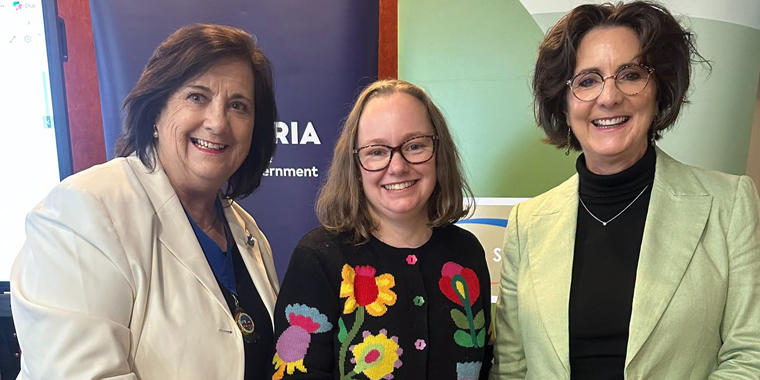
The study results were announced in Portland by the Member for Western Victoria, Jacinta Ermacora MP, who described the project as a “revolution” for the timber industry.
“This will help address growing demand for timber building supplies in Victoria,” she said.
“There are huge benefits here for the Portland community, the study has already unlocked new domestic markets and, potentially, international markets while supporting hundreds of jobs.”
The announcement was enthusiastically welcomed by the Victorian Forest Products Association (VFPA).
“The proposal is to create a facility in Western Victoria which is specifically designed to transform existing hardwood plantation timber into a suite of innovative new products, including engineered glue-laminated timber beams,” said VFPA CEO, Andrew White.
“The completion of the Hardwood Feasibility Study represents a significant milestone towards enabling innovative timber housing solutions in Victoria and reducing imports.
“The study confirms that a new facility could reduce the export of raw wood fibre (wood chips) by 300,000 green metric tonnes per annum, increasing local value-adding by instead transforming this fibre into valuable new housing and timber products, such as glue-laminated timber beams.”
Funded by the Green Triangle Forest Industries Hub (GTFIH), the Victorian Government and VFPA, the study focuses on the feasibility of the new hardwood manufacturing hub and represents the first phase of three in the development of Portland’s Precinct project.
This first phase, the proposed hardwood glulam project, would generate 74 permanent jobs in the local area in addition to 150 construction jobs building a 35-hectare site that will run 300,000 tonnes of logs a year through a log yard, sawmill, drying kilns and a glulam line, with an on-site biomass plant supplying the facility’s heat. At capacity, it would produce around 52,000m3 of glue laminated timber annually, plus sawn hardwood, finger-jointed timber and 180,000 tonnes of woodchips.
Stage one is put at more than $200 million in investment and it is important to note that despite the positive feasibility study it is not yet a funded project.
However, bluegum plantation hardwood EWP represents a viable alternative to higher-grade native timber hardwoods that have been removed from the Victorian market under the native forestry ban, so the ability to return value to the local timber sector and remove the risks surrounding a reliance on imported EWP makes this a doubly attractive proposition.
Stage two would add a laminated veneer lumber line. Stage three would manufacture components for prefabricated homes. Feasibility studies for those stages are in production. Developed in full, The Precinct group projects 280 ongoing jobs, more than one million tonnes of plantation timber processed each year, and building components for 20,000 homes annually.
Bluegum glulam is already succeeding in the Australian marketplace, with WTIBeam producing GL17 and GL18 beams in partnership with forest managers Australian Bluegum Plantations and OneFortyOne.
As the Feasibility Study shows, The Precinct could deliver an industrial supply of the product and deliver much-needed product as well as jobs and returns into the forestry sector.
“What this shows is that if Victoria continues to invest in affordable, low-carbon housing solutions that support regional employment, it is possible to reduce timber imports and at the same time get more houses built using Victorian-made products,” White said.
VFPA thanked its members, the State Government and the Green Triangle Forest Industries Hub (GTFIH) for supporting the Feasibility Study.