Gumatj visit to Tiwi strengthens First Nations leadership in northern forestry
By Hanna Lillicrap, Northern Territory Ord Valley Forestry Hub
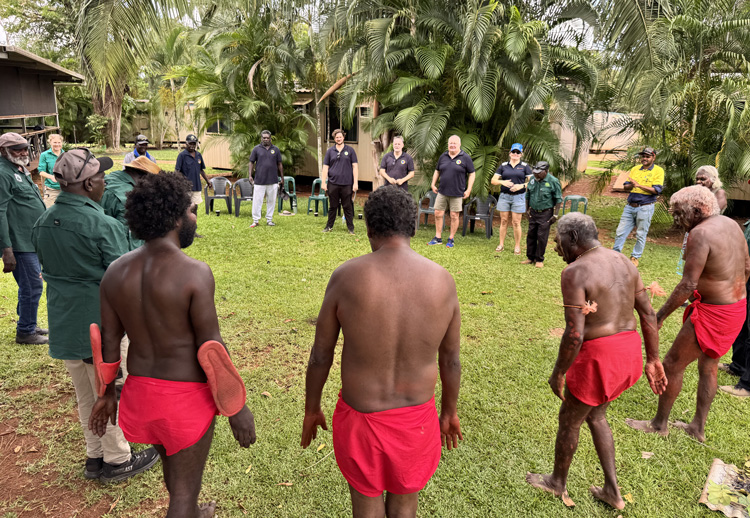
Tiwi dancers welcoming the Gumatj delegation to Yapilika forestry camp.
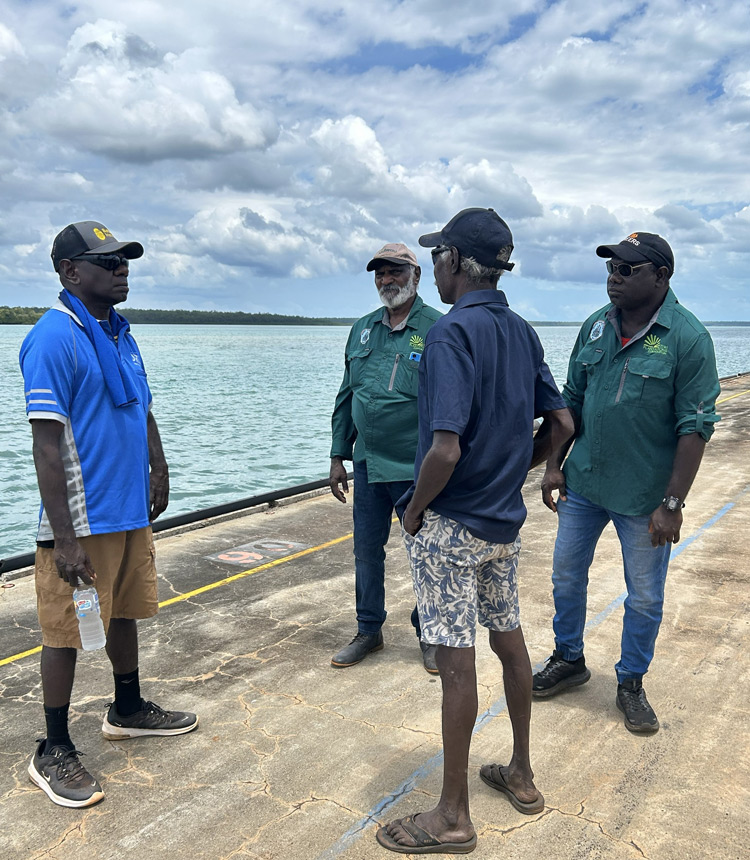
Tiwi and Gumatj directors discussing the operations, infrastructure and opportunities of Port Melville.
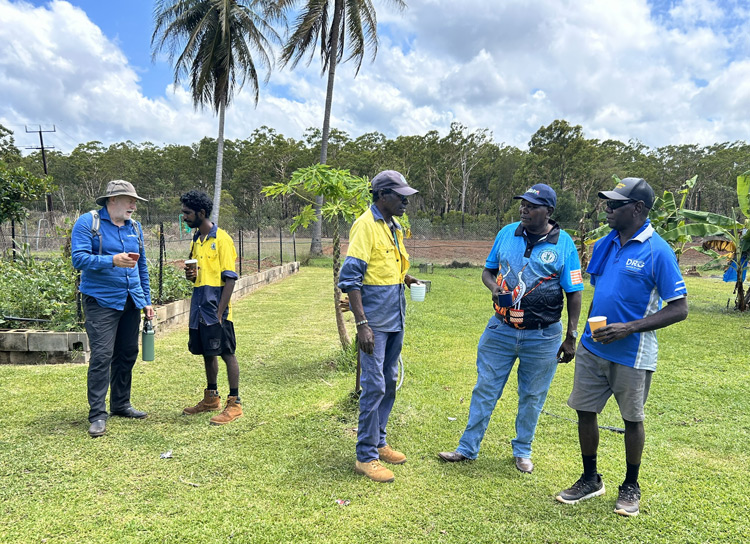
Gumatj delegates visiting the TITEB farm and training facilities and learning about current forestry training programs.
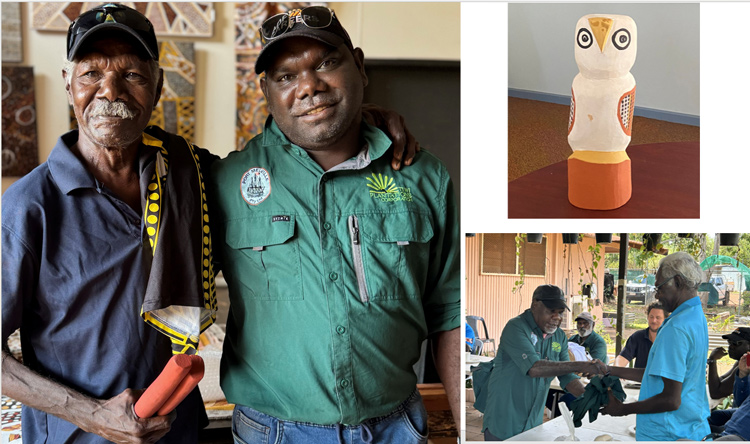
Gifts were exchanged between the clans at the conclusion of the visits on the Tiwi Islands.
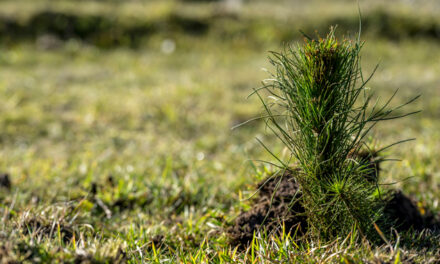
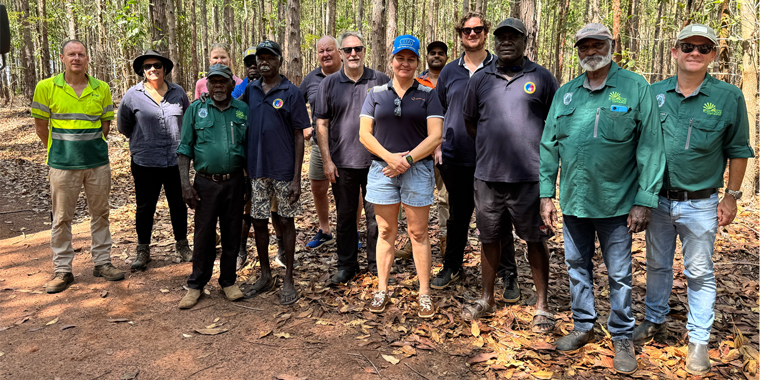
MAIN PIC: Participants visiting Eucalyptus pellita trial stands and discussing research, species selection and silviculture. All images courtesy NTOVFH
In October 2025, representatives from the Gumatj Corporation travelled to the Tiwi Islands for the second stage of a landmark First Nations forestry knowledge exchange. Building on an earlier visit to Arnhem Land, the on-country program strengthened cultural ties, showcased Tiwi plantation operations and training pathways, and reinforced shared ambitions for Aboriginal-led forestry in northern Australia.
Welcome to Yapilika and sharing the Tiwi forestry story
The Gumatj delegation arrived at Yapilika forestry camp on Melville Island, where they were welcomed by Tiwi Plantations Corporation (TPC) Chairman Kim Puruntatameri and members of the Munupi clan, Traditional Owners of the country on which the camp is located. A ceremonial welcome by Tiwi dancers set the tone for the visit, reaffirming cultural ties between the Tiwi and Yolngu peoples.
An introductory session followed where Tiwi directors presented the history, challenges and growth of the Tiwi forestry estate. Gumatj visitors learned that the Tiwi plantation estate represents around 4.5% of Australia’s total hardwood* plantation area, and that TPC remains the only fully First Nations-owned plantation business in the country.
Directors from both corporations discussed their expectations for this part of the exchange, emphasising the value of reconnecting, understanding each other’s histories and learning from parallel experiences in forestry development. The Tiwi leadership highlighted the importance of persistence in maintaining a long-term forestry vision, even through periods of market pressure and other challenges. The critical role of research as a foundation for informed decision-making was again emphasised.
Both Boards also reaffirmed a shared priority: finding ways to engage young people in forestry careers so they can carry these businesses forward into the future.
Nursery operations and the next generation of Tiwi forestry workers
The Gumatj group visited the Tiwi nursery, where Tiwi employees demonstrated propagation techniques for Eucalyptus pellita, the species selected for the second plantation rotation. Visitors observed seedling production, watering systems, quality control processes and the integration of on-the-job training delivered in partnership with the Tiwi Islands Training and Employment Board (TITEB).
Gumatj visitors noted the high level of skill among nursery staff, the strong work ethic on display, and the visible pride employees take in contributing to a Tiwi-owned forestry enterprise.
Plantation tours: research, silviculture and long-term planning
The following day, the group visited several plantation areas, including early E. pellita trial sites and new planting areas. TPC Deputy Chair Gibson Farmer Illortaminni shared stories about the earliest trials undertaken on the Islands and the long-term research underpinning species selection. Staff from Plantation Management Partners explained current site preparation techniques and how different approaches are being tested to manage competition from acacia regrowth and to maintain soil health.
The group discussed field management techniques, silviculture, soils, fire management and long-term yield expectations. For Gumatj, these insights provided a complementary comparison to their native forest operations on the Gove Peninsula.
Strategic infrastructure and Tiwi-owned supply chains
The group continued to Port Melville and the Tiwi Port and Marine facilities. Tiwi directors outlined the port’s development, past management arrangements and its recent transfer to full Tiwi ownership.
Standing on the 200-metre pontoons, the two groups discussed the port’s strategic value for future forestry exports, marine operations and other regional development. For Gumatj delegates, the visit highlighted how Aboriginal ownership of infrastructure can strengthen supply chains and support long-term economic independence.
Training pathways and shared challenges with TITEB
On the final day, the delegation travelled to Bathurst Island to meet with TITEB representatives at their training farm and Wurrumiyanga headquarters. TITEB staff outlined the structure of current forestry training programs, the sequencing of training blocks and the logistical challenges of delivering training across two islands with limited transport and accommodation infrastructure.
Gumatj delegates identified strong similarities between the challenges faced in East Arnhem Land, particularly long distances, high costs and limited access to specialist trainers. This further highlighted the value of sharing solutions between regions.
At the TITEB offices, participants viewed a short film documenting an East Arnhem Land forestry project involving Traditional Owners and researchers. The film provided a meaningful conclusion to the technical component of the visit, linking back to the original inspiration for the exchange and illustrating how shared learning can continue across generations.
Concluding the exchange on country
The visit concluded with a final gathering where both clans reflected on the experiences shared over the three days. Rather than a formal evaluation process, the closing session focused on acknowledging relationships strengthened during the exchange and recognising the value of learning together on country.
In keeping with cultural protocol, the exchange ended with the presentation of gifts between the Tiwi and Gumatj delegations, including locally produced artworks. These gifts symbolised respect, appreciation and enduring connection, reinforcing that the exchange was not only about forestry operations, but also about culture, identity and shared responsibility.
The closing moments made clear that the partnership established through the Forestry business exchange extends beyond a single project. Both organisations expressed a strong commitment to maintaining collaboration and supporting each other’s forestry aspirations into the future.
Broader learnings and future opportunities
The exchange represented the first direct forestry-focused partnership between Tiwi and Gumatj despite both organisations having decades of forestry experience. The on-country format proved essential for building trust, strengthening cultural connections and enabling practical learning.
Elders shared stories of historical connections between the communities, including instances when Yolngu people were sent to the Tiwi Islands to plant cypress trees under colonial punitive regimes – a reminder of long-standing cultural links that extend across the Top End region.
Gumatj representatives noted that limited access to research networks and professional forestry expertise has historically constrained opportunities in East Arnhem Land. In contrast, Tiwi’s long-term engagement with research partners has supported business resilience and investor confidence. The exchange helped identify ways Gumatj could strengthen similar partnerships in their region.
Both Boards recognised that with native forest harvesting winding down in several southern regions, northern Australia will become increasingly important as a source of sustainably managed hardwoods. First Nations-owned forestry businesses such as TPC and Gumatj are well positioned to contribute to this emerging role.
As one Gumatj director stated, the exchange represents “a big deal for our mobs — an opportunity to drive change together for the benefit of our people.”
The second stage of the Forestry Business Model Exchange reinforced the strength of First Nations leadership in forestry across northern Australia. Through culturally grounded, peer-to-peer learning, both Tiwi Plantations Corporation and Gumatj Corporation gained valuable insights into operations, training, governance and long-term forestry strategy.
The Northern Territory Ord Valley Regional Forestry Hub acknowledges the support of DAFF and the Northern Hub that enabled this exchange and commends both Aboriginal organisations for demonstrating how First Nations led forestry can strengthen regional economies and deliver lasting outcomes for communities, country and the forestry industry.