Bilateral Tassie talks planned
The Albanese and Rockliff Governments have begun negotiations for sustainable Tasmanian forestry.
On Tuesday, the Federal and Tasmanian governments finally stepped up to the plate and committed to work together towards a bilateral agreement to support sustainable forestry in Tasmania into the future.
From July 1, 2027, the Albanese Government’s environmental law reforms will bring forestry operations covered by Regional Forest Agreements (RFA) under Federal environmental regulation.
This has caused concern in Tasmania in particular, as forestry operations in RFA regions will be shifted over to national environmental standards – as the Government puts it: ‘bringing the sector into line with all other industries, while supporting a sustainable and well-regulated future.’
The Albanese government has previously pledged to support forest industries. Accordingly, on Tuesday, Federal Minister for the Environment and Water, Murray Watt issued a Notice of Intention to develop a draft bilateral agreement that would accredit Tasmania’s forest management framework alongside new national environmental standards.
The announcement notes that “The Albanese Government is working closely with all RFA states – Tasmania, New South Wales and Western Australia – to develop landscape-scale approvals for forestry under the reforms.
“To support this transition, the Australian Government announced $28 million over two years in the 2026-27 Budget to help states with RFAs align their forest management systems with new requirements under the national environment law.
“Up to $8.5 million is available to Tasmania to support this work, recognising the scale and importance of its public native forestry sector, alongside its plantation and private forestry industries.”
Federal Minister for the Environment and Water, Murray Watt, said: “Formally commencing the bilateral negotiations marks a significant step forward in aligning Regional Forest Agreement forestry operations with the Australian Government’s landmark reformed national environment law, delivering stronger environmental protections alongside greater certainty for industry.
“We believe in a strong and environmentally sustainable future for Tasmania’s forestry industry, and these reforms will see the sector meet the same environmental standards we apply to every other industry across Australia.
“We will be working with the Tasmanian Government over the coming months to develop and then formalise the bilateral agreement which will support the industry to operate in line with national environmental laws,” he concluded.
Tasmanian Minister for Business, Industry and Resources, Felix Ellis, welcomed the commitment on behalf of the Tasmanian Government, calling it “an important step toward securing the long-term future of Tasmania’s sustainable forestry industry”.
He said, “For decades, the Regional Forest Agreement has provided the foundation for a strong and sustainable forestry industry in Tasmania, supporting regional jobs, investment and responsible forest management.
“It is important that accreditation of Tasmania’s Forest Practices System continues, providing strong environmental protections while avoiding unnecessary duplication and red tape.
“We will continue working closely with the Australian Government to secure a practical and durable accreditation pathway that gives industry certainty, protects investment and ensures a sustainable source of timber products critical to our economy and future housing needs.”
The discussion comes at a pivotal time for both Tasmanian and Australian forestry. On the one hand, the Albanese Government has recognised the central importance of forestry for both the economy and meeting our housing targets.
Federal Minister for Agriculture, Fisheries and Forestry, Julie Collins, said, “Our Government will continue working closely with industry, unions and the Tasmanian Government to support Tasmania’s forestry industry and the jobs it supports.
“We have already delivered a $300 million record investment to back Australia’s forestry industry, because we know the critical contribution forestry makes in Tasmania and across the country. We are continuing to back the future of the industry with a new $300 million Forestry Growth Fund which will bring our total investment to $600 million.”
On the other hand, these discussions are taking place against the backdrop of a concerted effort to end Tasmanian native forestry by stealth (see story pages 8 and 9 – issue #902) and delegitimise native forestry using populist arguments based on misinterpreted ‘science’ (see pages 14 and 15 – issue #902). Clear heads and good faith will be essential to maintain this significant Tasmanian industry.
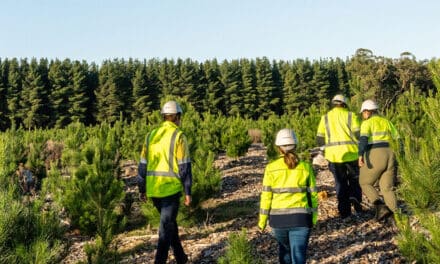
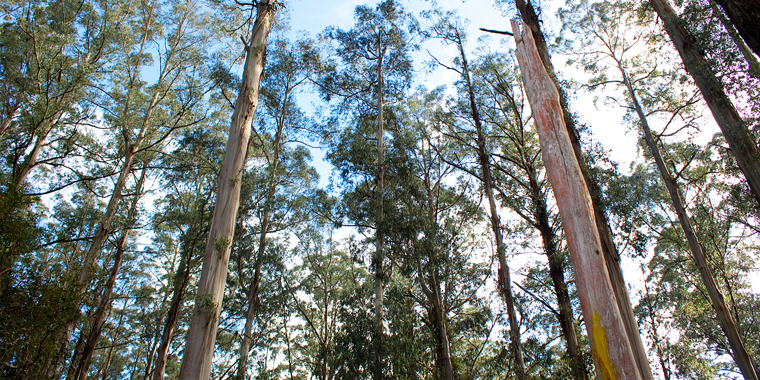
MAIN PIC: Both governments have committed to the future of native timber harvesting in Tasmania. Image: CC/Rexness