Australia’s earliest boat comes home
A chance find during the Barangaroo excavations reaches the ANMM.
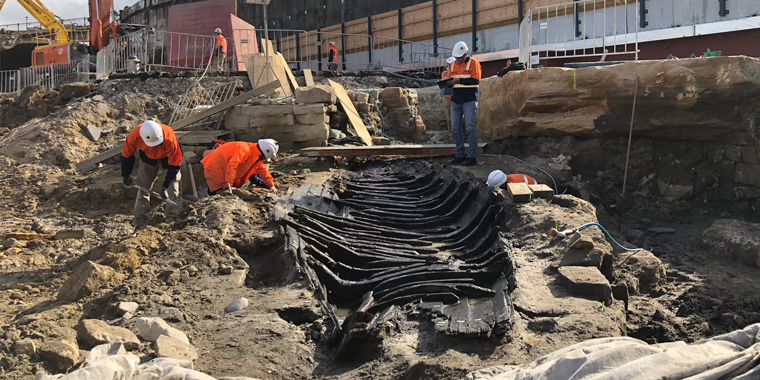
The boat in situ, being excavated with the Barangaroo station works carrying on around it. Image: courtesy Casey & Lowe for Sydney Metro
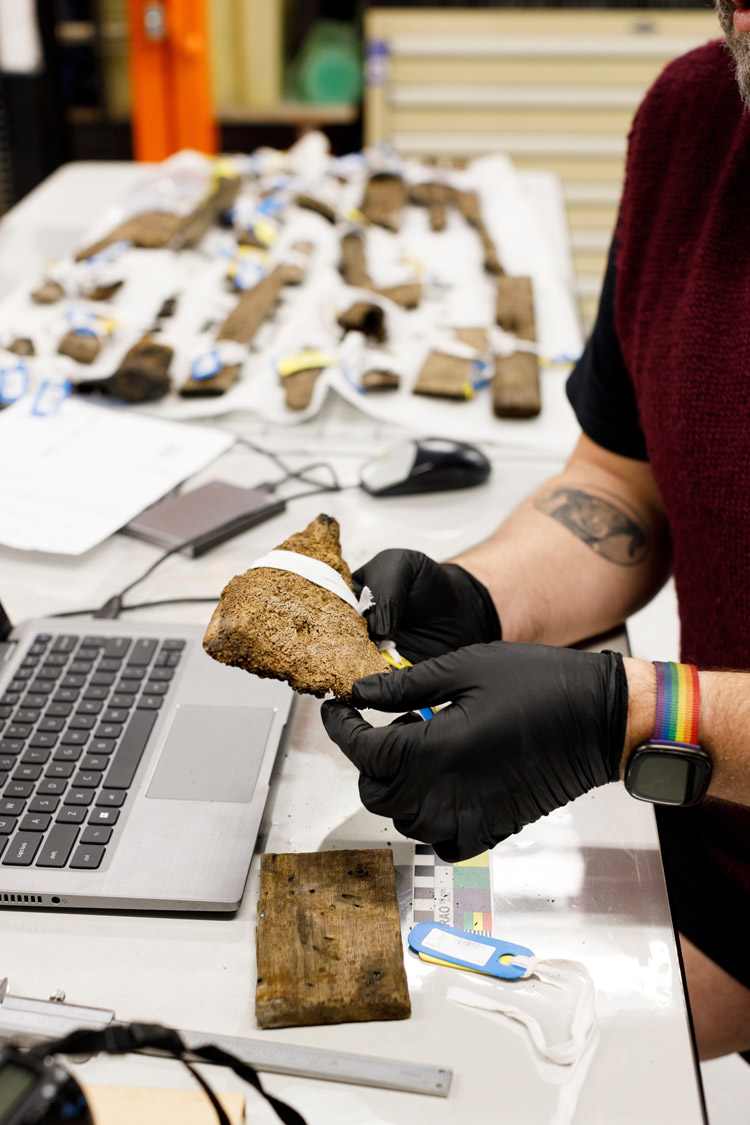
Reconstructing the preserved boat is the next task for conservators. Image: courtesy Australian National Maritime Museum
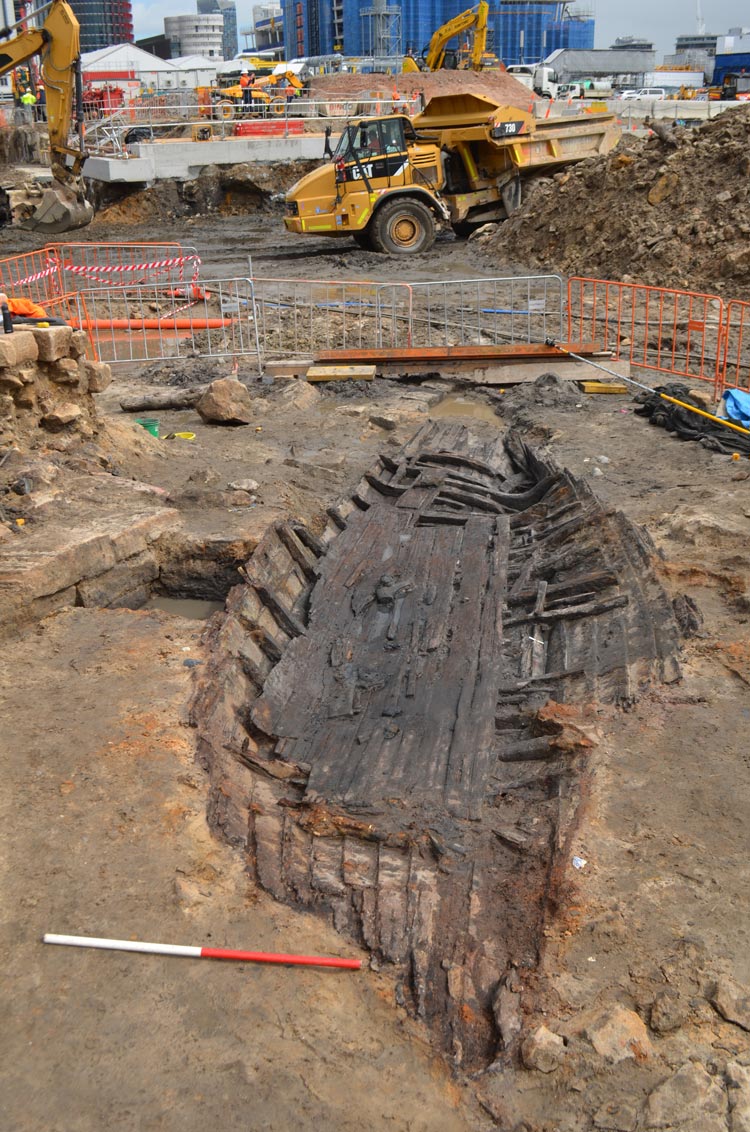
MAIN PIC: Each piece was carefully recorded and labelled before being moved. Image: courtesy Casey & Lowe for Sydney Metro
In 2018, during the excavation for the Sydney Metro station at Barangaroo, a colonial-era boat was discovered under layers of tidal sand and mud. The nine-metre boat, made from Sydney Blue Gum, Stringybark and Spotted Gum sourced in the Sydney basin, is believed to be around 200 years old – Australia’s oldest surviving boat. Waterlogged, but remarkably intact, it spent about 150 years buried under wharves, warehouses and shipyards on what was once a small harbourfront beach.
The boat was built using the ‘clinker’ technique of overlapping timber planks to make up the hull, then coated in pitch, and is believed to have been used to transport goods around Sydney Harbour and Parramatta River.
Since its discovery, specialist conservators and maritime archaeologists have worked to document the vessel and associated artefacts, stabilise fragile timbers and plan the long-term treatment needed to prevent shrinkage and deterioration as it dries.
The 294 individual pieces of excavated timber were treated with Polyethylene Glycol over the course of 18 months, which reinforces the cell structure of the wood and reduces further degradation. It has been used on several other notable recovered shipwrecks, including the Mary Rose, the Bremen Cog, Batavia, and the Vasa. The boat was then snap-frozen and transported to Braeside, Victoria, to be professionally freeze-dried.
On Monday this week, it was finally delivered to Australian National Maritime Museum in a refrigerated truck container. Now in the Museum’s care, this conservation program will continue through detailed assessment and careful preservation so the boat can be safely researched, interpreted and ultimately shared with the public.
Minister for Transport John Graham said: “Sydney Metro is the most modern form of transport in Sydney, and it is a nice bit of symmetry that it was construction of the metro line that unearthed the nation’s oldest colonial era boat.
“This is a piece of Australian history we are determined to protect for many more centuries to come.
“I want to thank those who carefully excavated the boat, preserved it and the Australian National Maritime Museum for giving it a permanent home so generations to come can get a unique look at life on Sydney Harbour in the early 1800s.”
Daryl Karp AM, Director and CEO of the Museum said, “The vessel is an eyewitness to history – to the first tentative decades of European settlement, when Port Jackson was the conduit for transport and trade and vessels of all types plied its waterways.
“This is the perfect archaeological project for Australia’s museum of the sea and the National Maritime Collection. The storytelling opportunities for this are truly exciting; it is more than a Sydney story, it is a national story – it marks a pivotal moment in the country’s maritime history.
“I thank Minister Graham and Sydney Metro for their stewardship of this artefact, and we look forward to bringing life back to the vessel over the coming years,” she added.
The Museum has continued the conservation process and begun plans for the public interpretation of the vessel and associated items found alongside it.
Paul Nicolaou, executive director of Business Sydney said that the Sydney Chamber of Commerce, which celebrates 200 years in 2026, will outline a corporate support program with the Museum in coming months.
Karp concluded, “We expect to open to the public a permanent exhibition, detailing not only the vessel and associated artefacts but the stories it elicits of this time mid-way through 2027.
“It is a gateway to the past that we know visitors to the museum will enjoy investigating.”