Behind the label
Stepping inside FSC®-certified forestry.
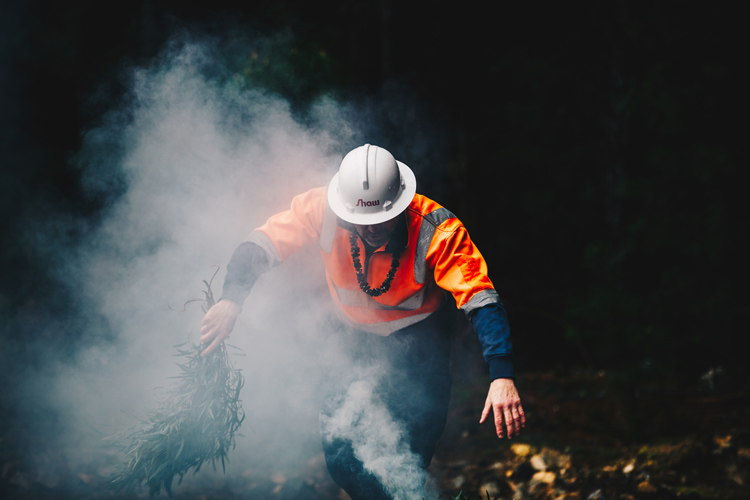
Mark Harriss of Melaythenner Teeackana Warrana (Heart of Country)
Aboriginal Corporation leads the smoking ceremony, burning local native
plants to create a sense of place and harmony with Country.
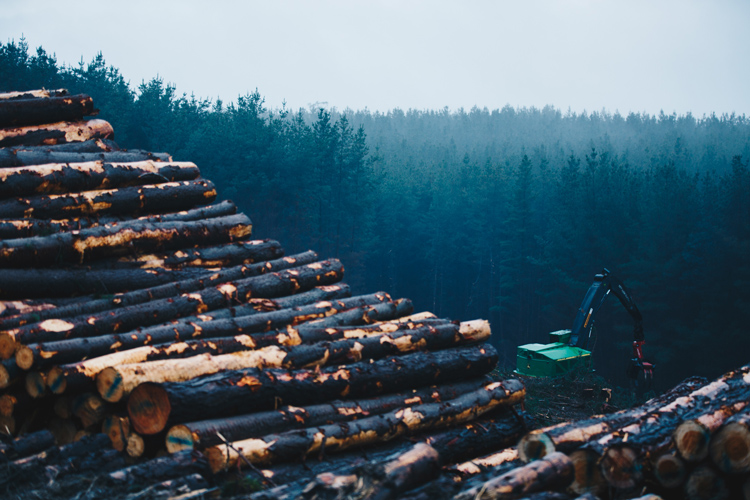
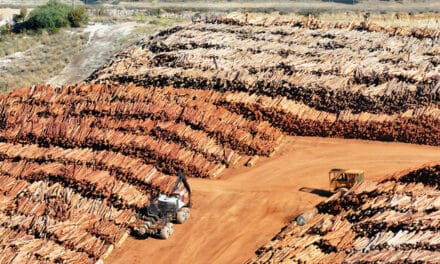
Harvesting in action at Taswood Estate: freshly cut radiata pine logs are
stacked as machinery operates in the background under FSC certification.
Timberlands Pacific staff explain how slope, terrain and environmental values shape harvesting methods and landscape management decisions, including nest protection for wedge-tailed eagles, habitat retention and the prescriptions that guide every operation.
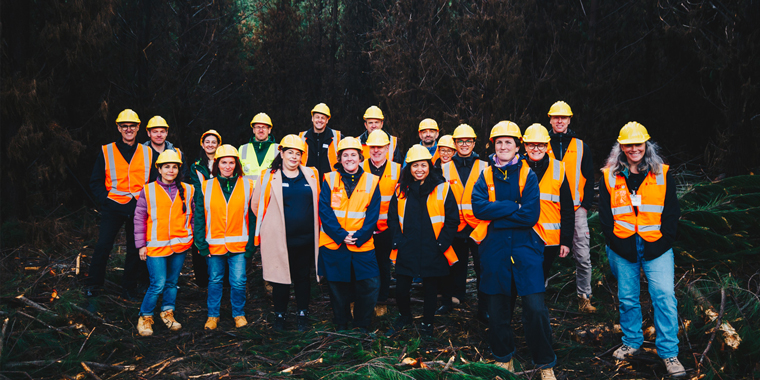
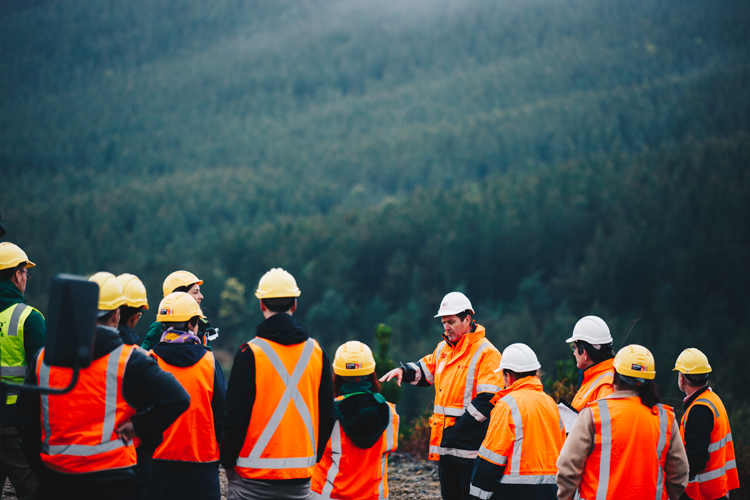
MAIN PIC: Representatives from Coles Group, Kimberly-Clark, Essity, Merry People, Bunnings, Opal, Winc, Uncle Bills, Visy and others come together at the close of the FSC Forest Walk. All images: © FSC Australia and New Zealand / Jasper da Seymour
By the time forest products reach our everyday lives, it can be easy to lose sight of the forests, people, practices and decisions behind them. This year’s FSC Forest Walk brought those connections into focus for businesses that support FSC, giving them a first-hand view of what responsible forestry looks like in Australia.
Each year, FSC Australia and New Zealand invite businesses to get their boots on the ground, stepping into a certified forest to meet the people responsible for its management. For FSC certificate and promotional licence holders, this experience provides them with a first-hand connection between the responsible sourcing commitments they make and the forests those commitments help support locally.
This year, the FSC Forest Walk took place at Taswood Estate in northern Tasmania and was hosted by Timberlands Pacific. The 54,000-hectare plantation estate is predominantly planted with radiata pine and provided the setting for representatives from some of Australia’s leading brands, including Coles Group, Kimberly-Clark, Essity, Merry People, Bunnings, Opal, Winc, Uncle Bills and Visy.
The experience began with a smoking ceremony, creating a powerful sense of place and connection to Country. Mark Harriss of Melaythenner Teeackana Warrana (Heart of Country) Aboriginal Corporation invited us to engage and see an alternative view of self, industry and harmony with Country, burning local native plants to create smoke that moved across the participants.
Collaboration and self-ownership were a strong theme throughout Mark’s reflections, particularly the importance of working together in ways that are respectful and responsible to Country. He spoke about the importance of industries such as forestry operating responsibly and in harmony with the landscape.
Braving the elements was all part of the experience, with rain, mud-caked boots and low cloud drifting through the trees as participants witnessed harvesting in action, something many had never seen before. They learnt how factors such as slope, terrain and environmental values influence the choice of harvesting method, from ground-based and tethered systems to cable harvesting. The team also explained the role of landscape management in forestry, a strategic approach that considers ecological, visual, cultural and sustainability values across the broader landscape, rather than within individual coupes alone.
Skies cleared just in time to provide a clear outlook over the Taswood Estate, showcasing the different age classes of the trees alongside areas of native forest managed for conservation under Timberlands Pacific’s FSC certification. A wedge-tailed eagle soared in the distance right on cue as the Timberlands team explained how management focuses on nest protection, disturbance avoidance and landscape-scale habitat retention. This includes nest identification, constraint periods and Forest Practices Plan prescriptions that establish mandatory protection zones around nests, with restrictions on harvesting, road construction and other operations nearby.
Site re-establishment was another key focus, with participants learning how establishing a healthy, well-stocked crop is critical to achieving good outcomes. Every tree is planted by hand and subject to quality assurance checks to ensure the new crop gets off to a strong start.
Reflecting on the morning’s learnings, Sally Wilson, Landscape Specialist at Bunnings, said, “Seeing first-hand how responsible forest management is implemented across such a large estate was both impressive and inspiring. From planning and harvesting through to regeneration and habitat protection, it was clear that sustainability and environmental stewardship are at the forefront of every decision.”
The smell of freshly harvested pine filled the air as we arrived at a thinning operation, where participants saw first-hand how this practice is used to remove suppressed or poorly formed trees, giving the more dominant, better-formed trees greater space and resources to grow and ultimately meet sawlog specifications. Carefully stepping between the pine trees, participants learned from an Operations Forester how to accurately measure tree diameter at breast height and use a hand-held laser to measure tree height. Getting hands-on with these tools gave participants a better understanding of the skill and attention to detail involved in managing a forest and making decisions that will shape its future.
Warming up by the fire over lunch at Scottsdale Football Clubhouse, we heard from Peter Coleborn, Dorset Council’s Bikes and Trails Manager, about how forestry operations and mountain biking coexist within the famous Blue Derby network. Coleborn’s presentation reflected Timberlands Pacific’s commitment to proactive engagement with neighbours and stakeholders. As part of its FSC certification, the company is required to meaningfully engage with those who may be affected by forest operations. Timberlands Pacific approaches this with great enthusiasm, and in Derby this includes shuttle operators, tourism businesses, local government, mountain bikers and the broader community.
As the day drew to a close, we heard from participants about what the forest walk experience had given them, including Cassandra Wheat, Head of Product from Merry People, who said, “It was really insightful to see the scale of the operation, both physically and economically, which I hadn’t fully appreciated before. I also really enjoyed seeing first-hand the measures in place to protect native flora and fauna, waterways and bird habitats.”
Many travelled long distances to attend the event, showing just how valuable opportunities like the FSC Forest Walk are for our stakeholders. The day was a chance to recognise the work of certified forest managers such as Timberlands Pacific and to see what FSC’s requirements look like on the ground. As the attendees headed home, we hope they took with them a stronger connection to the forests behind the products they source, and a renewed commitment to supporting responsible forestry through their supply chains.