Innovatek’s Residues to Revenues Conference
In September 2026, Innovatek’s Residues to Revenues (R2R) conference will bring together industry-leading speakers to share practical case studies, innovative solutions and new opportunities for the sector.
Following the successful 2025 Wood Residues and Bioeconomy Innovations combined event in Rotorua we are pleased to announce more innovative speakers for our return to Australia with our ‘Residues-to-Revenues Conference at VOCO Hotel in Brisbane on 23-24 September.
This popular forest and wood technology event brings industry leaders together for networking and learning about new developments that are now valuing wood byproducts more than ever before.
With increasing financial pressures facing our forest and wood products sector its essential for forestry and energy professionals seek new ways to convert wood byproducts from logging and sawmilling into profitable and climate positive bioenergy applications.
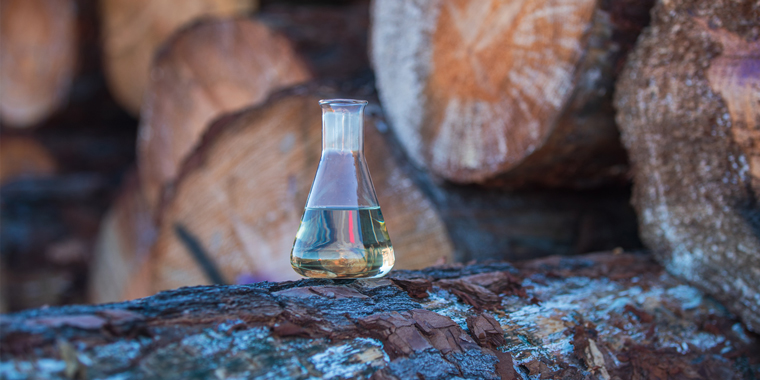
This event provides new insights into emerging biomass markets, connects suppliers with industrial energy users, and showcases innovative technologies for efficient residue recovery and processing in Australasia. With new processes being commercialised now, wood residues are being sought for liquid fuels and carbon-positive products that bring credits and new product markets never before available.
Speaker highlights
- Biomass for Energy: The Redbank Power Station Transformation by Mike Haywood, General Manager, Verdant Earth Technologies
- Residues to Liquid Fuels: Bridging the Gap by Miriam Blaine, Process Engineer, HAMR Energy
- Turning Waste Into Wealth: Pyrolysis Technology for Biochar, Energy andCarbon Removal Revenue by Melissa Rebbeck, Business Development, Metamorf Engineering
- Biocarbon, The GreenChar Roadmap: Utilising Waste Biomass for Industrial Metals Production by John Mellowes, Co-Founder & Chief Engineer
- Regional Biomass Manufacturing Platform, by Curtis Gibson, Managing Director, A&E Gibson
- Utilisation of Biomass for Renewable Fuel and Low Emissions FertiliserManufacturing by Gareth Forde, Principal Engineer, All Energy
- Jacob Kohn, CEO & Co-founder, Futurity Bio Ventures
Miriam Blaine
Miriam’s presentation for HAMR Energy, an emerging low-carbon liquid fuels industry, including shipping and aviation, presents a compelling new market for underutilised forestry biomass. A market that needs feedstock at scale and on long-term contracts. Forest managers across Australasian forest plantation sectors are well-placed to supply this need. One obstacle has been a lack of validated data on residue chemistry, collection logistics and carbon intensity needed to underpin commercial supply agreements. Drawing on HAMR Energy’s Fibre to Fuels research program, conducted with CSIRO, university partners and forestry partners across three Australian forestry hubs, her presentation outlines what we are learning and what it means for those across the forestry sector looking to access this opportunity.
Gareth Forde
Gareth Forde, from All Energy’s presentation will include several case study projects including blending boiler feedstocks of woodchips combined with other organic waste streams for a major meat processing company for thermal energy production.
A pilot program to develop and test the potential for biomass boilers to provide sustainable fuel options for Australia’s meat processing facilities has successfully produced heat at a supply cost of below $3 per gigajoule (GJ), at JBS Riverina’s Yanco facility in New South Wales.
nstigated by the Australian Meat Processor Corporation (AMPC), the trial demonstrated how different types of biomass, such as the partially digested grain and grass found in an animal’s paunch, woodchip, nut shells and sawdust, could be blended and processed in a boiler to supply thermal energy.
Bioenergy is currently the third most common source of energy used by meat processing facilities behind grid electricity and grid gas, with coal in fourth place. Multi-fuel biomass can compare favourably with traditional forms of thermal energy such as on-site coal at $10/GJ and grid gas at $25/GJ.
The Australian Beef Sustainability Framework highlights the high cost of energy as one of the factors that puts pressure on processors to be price competitive in global markets. Profitability across the value chain is a key pillar of the Framework, as is a commitment to achieve carbon neutrality by 2030 (CN30).
Conversion of waste into bioenergy is one option for processors to reduce production, processing and consumption waste, and research is continuing into the use of renewables within the energy mix to achieve CN30.
 Jacob Kohn
Jacob Kohn from Futurity Bio Ventures will explain how lignin is being converted into low-emission alternatives for road bitumen.
Futurity Bio-Ventures has developed LIMA™, a proprietary lignin-based additive designed to enhance bitumen binders in asphalt, improving properties like durability and moisture resistance. The LIMA™ additive is part of a growing focus on sustainable materials in road construction, including fibre-based innovations.
Melissa Rebbeck
Melissa Rebbeck from Metamorf Engineering and Chair of the Australia & NZ Biochar Industry Group examines how pyrolysis is converting waste biomass into biochar while creating new opportunities through carbon removal. Her team received very favourable feedback from wood producers throughout Australasia earlier this year following their involvement at WoodTECH conferences in June in New Zealand and Queensland.
Curtis Gibson
A&E Gibson has completed the design and build of an innovative conveyor system for Seata Group, providing an integrated material handling solution suited to the demands of Seata’s pyrolysis and gasification process. It forms an important part of Seata’s pilot plant in Glenn Innes, NSW. This plant promises to play a critical future role in renewable gas, biofuels and biochar areas.
Seata’s core innovation is combining two well-established industrial principles, thermal looping and chemical looping, into a single unified process. Instead of burning biomass (which releases CO2), the system uses a recirculating heat carrier to break down organic material without combustion. This produces two valuable outputs at once: clean syngas for energy, and biochar for carbon storage.
Curtis’ presentation will demonstrate how we can solve for the growing biosolids and organic waste streams across Australia and provide a case study on how this was achieved.
The R2R Conference is focused on transforming wood waste into profitable biofuels, bioenergy, and renewable bioproducts.
It is designed with practical insights for those in the forestry, wood processing, and bioenergy industries to move from simply disposing of waste to creating sustainable revenue streams.
We have the potential to transform the forestry sector into a provider of biofuels, bioenergy and a range of renewable bioproducts. This event helps forest owners and managers, harvesting contractors, sawmills and wood manufacturing companies better understand the real value of wood residues and the opportunities in supplying this growing market.