Australia & New Zealand forest valuation standard
The new Standard will represent plantation and native forest values accurately.
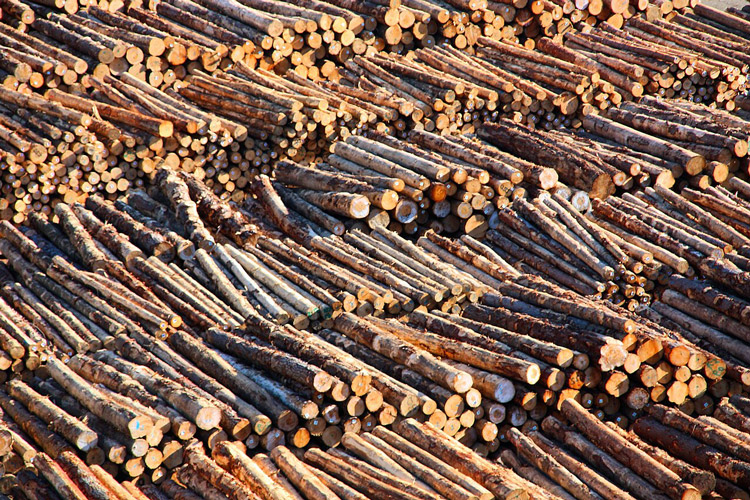
The new standard will help accurately value forests before they become timber logs. Image: CC/Wikimedia Commons/Marek Slusarczyk
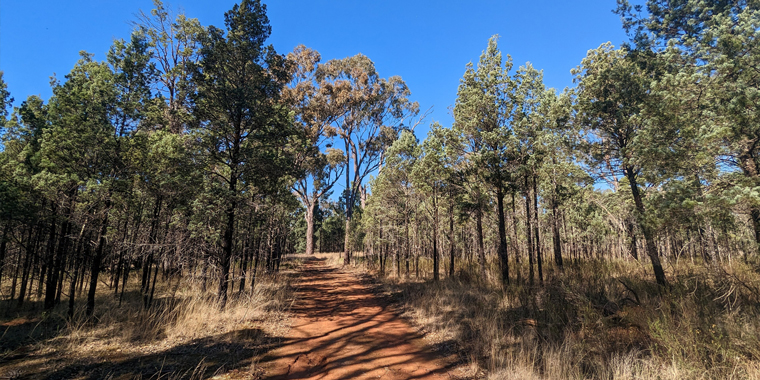
MAIN PIC: While Australian forests like Milbrulong State Forest may look nothing like their New Zealand counterparts, the new Standard provides consistent benchmarks for valuing them. Image: CC Wikimedia Commons/B897
Forests have been accorded important roles in future planning by governments in this region. They are seen as future building materials, current and future carbon stores and important agricultural supports. Add to this their multiple habitat and recreational uses and they are undeniably valuable assets.
When it comes to everything from making industry predictions to economic assessments to financing those assets, we need to know exactly how valuable they are.
Which is why Forestry Australia and the New Zealand Institute of Forestry (NZIF) launched the Australia & New Zealand Forest Valuation Standard late last week.
The ANZ Forest Valuation Standard, a joint NZIF and Forestry Australia initiative, is the result of nearly a decade’s work by the national associations to bring together their country-level forest standards into a single document capable of representing plantation and native forests.
The first Australia & New Zealand Forest Valuation Standard was developed in consultation with forest professionals, researchers, industry and practitioners on both sides of the Tasman. It reflects the latest thinking and best practice in forest valuation across both countries and is designed to assist valuation practitioners, forest managers, investors, and those reporting forest values.
Dr Michelle Freeman, president of Forestry Australia, said: “The merging of the separate country-level standards held by Forestry Australia and New Zealand Institute of Forestry is a significant milestone. It reflects the strength and value of ongoing collaboration and partnership between our countries, our industries and professional organisations.
“Importantly, while the ANZ Forest Valuation Standard is intended to address common interests of our national forest industries, it is flexible enough to allow for differences. The Standard will be an evolving tool to help shape the forest sector’s future and support continued innovation and improvement, as markets, reporting expectations, and sustainability considerations continue to evolve.
Concurrent with the ANZ Forest Valuation Standard, Forestry Australia has launched the Australian Carbon Standard Exposure Draft, to sit alongside the existing New Zealand Carbon Standard.
Forestry Australia has also recently examined the implications for Australian reporting entities arising from the newly mandated Australian Accounting Standards Board Climate Related Disclosures (AASB S2).
These latest developments will be examined at the upcoming Forestry Australia Valuation Standard Summit, to be held next week in Melbourne. (Click here for details.)
Convenor of the Forestry Australia Valuation Committee Keith Lamb said “We are proud to celebrate the launch of the new ANZ Forest Valuation Standards and to showcase our work in Climate Related Disclosures. The Summit will also provide us an opportunity to recognise the work of those who preceded us. Professor Ian Ferguson and Dr Jerry Leech who prepared the first Australian Standard in the early 2000s, and Professor Bruce Manley and Messrs Bill Liley and Brian Rawley who pioneered the New Zealand Standard over 30 years ago.”
James Treadwell, President of the New Zealand Institute of Forestry, said: “Our members have contributed voluntary time and expertise to forest valuation standards for more than three decades. The first New Zealand standard was developed in the 1990s and has been continually refined since then as markets, reporting expectations, and forest management practices have evolved.
“This joint Australia and New Zealand Forest Valuation Standard is an important step forward. It reflects the strong professional relationship between the New Zealand Institute of Forestry and Forestry Australia and provides a consistent framework which will strengthen valuation practice across both countries.
“On behalf of NZIF, I would like to acknowledge the many members, in particular Bruce Manley (convenor since 1993) and Bill Liley, who have contributed their time over the years to developing and maintaining these standards. Their voluntary work underpins confidence in how forest assets are valued and reported.”
The development of the Standard has been supported by Forest & Wood Products Australia (FWPA), Jodie Mason, Head of Forest Research at FWPA remarked that, “FWPA is proud to have supported the finalisation of the Standard and development of the Australian Carbon Standard Exposure Draft.
“Forests deliver significant economic, social, environmental and carbon value – and this Standard sets an important benchmark for conventional forest valuations and provides a strong platform for building on valuation of non-wood forest values. Recognising value consistently and transparently strengthens confidence in forestry across Australia and New Zealand.”
The Standard will be unpacked at the Forest Valuation Summit in Melbourne next Monday and Tuesday, featuring more than 23 speakers from Australia, New Zealand and overseas. The program includes Professor Rodney Keenan (University of Melbourne), Dr Michelle Freeman (Forestry Australia), James Treadwell (NZIF), Jodie Mason (FWPA), Nick Ping (Manulife Investment Management), Dr Eleanor Tew (Forestry England), Michael Barbara (J.P. Morgan), Alexandra White (Deloitte), and Shakir Rahman (Clean Energy Regulator).
In addition to the launch of the standard, key topics discussed at the Summit will include: trends in valuing land under forests; good practice in forest valuation; climate-related financial disclosures (CFRD) and why this is important for forestry; getting ready for the new CRFD compliance regime – reporting obligations and implications for forest owners and managers; the Carbon Standard Australian Exposure Draft; turning carbon into capital; natural capital and financial statements; and the future of forest valuation
Dr Freeman concluded, “the release of the Standard is more than just a launch. It is a practical step toward stronger valuation practices, better reporting, and greater confidence in forestry’s role in investment, sustainability, and the economy. By combining trans-Tasman expertise, the Standard aims to provide a stronger foundation for assessing, communicating, and understanding forest value across the sector.”