Transforming fire station design for strength and staff wellbeing
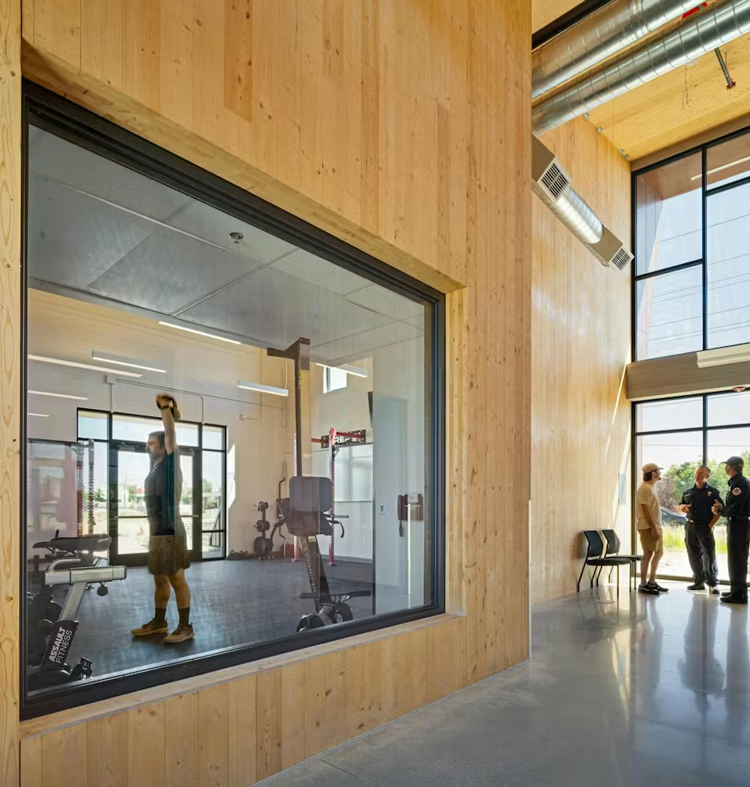
Biophilic design shines in the station’s fitness area, where warm CLT wood surfaces and expansive glazing promote physical wellbeing and mental recovery for firefighters in a high-demand profession.
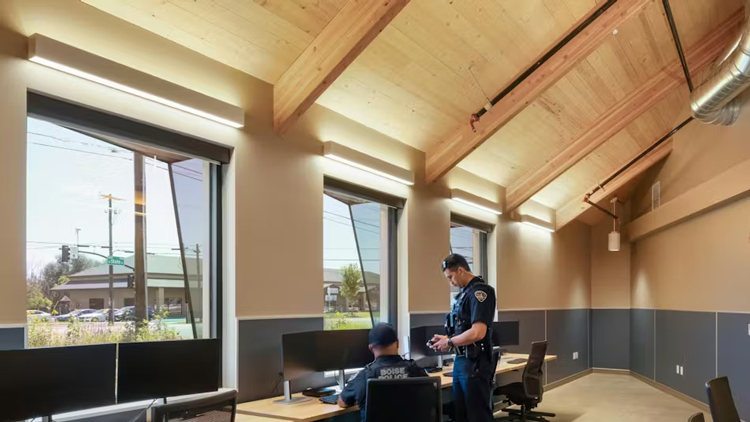
Exposed CLT ceilings and abundant natural light create a calm, collaborative workspace in Boise Fire Station 13, reducing stress and enhancing focus for emergency responders.
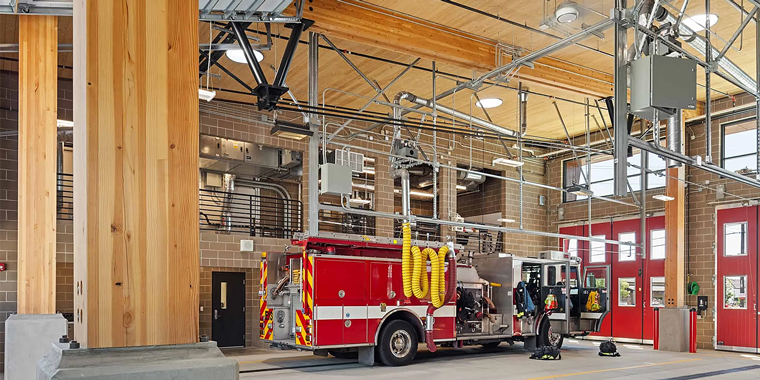
MAIN PIC: The expansive apparatus bay features robust CLT beams and natural wood finishes, combining fire-resistant strength with a welcoming, low-maintenance environment that supports daily operations and crew morale. All images: All images: Pivot North Architecture and Tobin Rogers
In the evolving world of architecture, cross-laminated timber (CLT) is emerging as a gamechanger for construction. This innovative material, made by bonding layers of lumber at right angles, creates robust panels that offer exceptional strength and versatility. Fire stations, which demand resilience against harsh conditions and a supportive environment for personnel, are increasingly adopting CLT to meet modern challenges. A prime example is the recently completed Boise Fire Station 13 in the United States, where CLT not only forms the building’s framework but also enhances its aesthetic appeal.
One of CLT’s standout features is its impressive durability, particularly in fire scenarios. When exposed to flames, the outer layers of the timber char, forming a natural barrier that protects the inner structure. This process allows the material to retain its integrity far longer than unprotected steel, which can warp under intense heat. Such properties make CLT ideal for emergency facilities, providing extra time for safe evacuation and response. Architects note that this predictability in performance gives designers confidence to incorporate larger open spaces without compromising safety.
Beyond structural advantages, CLT promotes sustainability in ways traditional materials like steel and concrete cannot match. Its production generates a significantly lower carbon footprint, aligning with global efforts to reduce environmental harm. Cities aiming for eco-friendly infrastructure find CLT helps achieve certification under green building standards. The prefabricated nature of CLT panels also speeds up construction, cutting down on-site time and minimising disruption to surrounding communities. This efficiency means stations can be operational sooner, a critical factor in public safety planning.
Perhaps most compelling is CLT’s role in enhancing firefighter wellbeing. Drawing on biophilic design principles, the natural wood surfaces create a soothing atmosphere that combats the high-stress nature of the job. Exposed timber elements absorb noise, improving acoustics in rest areas and reducing fatigue. The warm tones foster a sense of calm and connection, supporting mental health in line with trauma-informed approaches. In Boise Fire Station 13, which opened its doors in mid-2025, these elements have been integrated to promote collaboration through open layouts, while the material’s natural ageing adds character with minimal upkeep.
Jeremy Kircher, Boise’s Division Chief of Logistics, praises CLT for bringing a homely feel to what could otherwise be stark environments.
“It improves daily living and keeps projects on track through off-site fabrication,” he explains, highlighting its practical benefits.
As fire services worldwide face climate pressures and workforce retention issues, CLT represents a forward-thinking solution. By blending durability, eco-responsibility, and human-centred design, it’s reshaping how we build spaces for those who protect us.